
What a student sees
Sample data
Explore the sample dashboard (partner sign-in)What your office sees
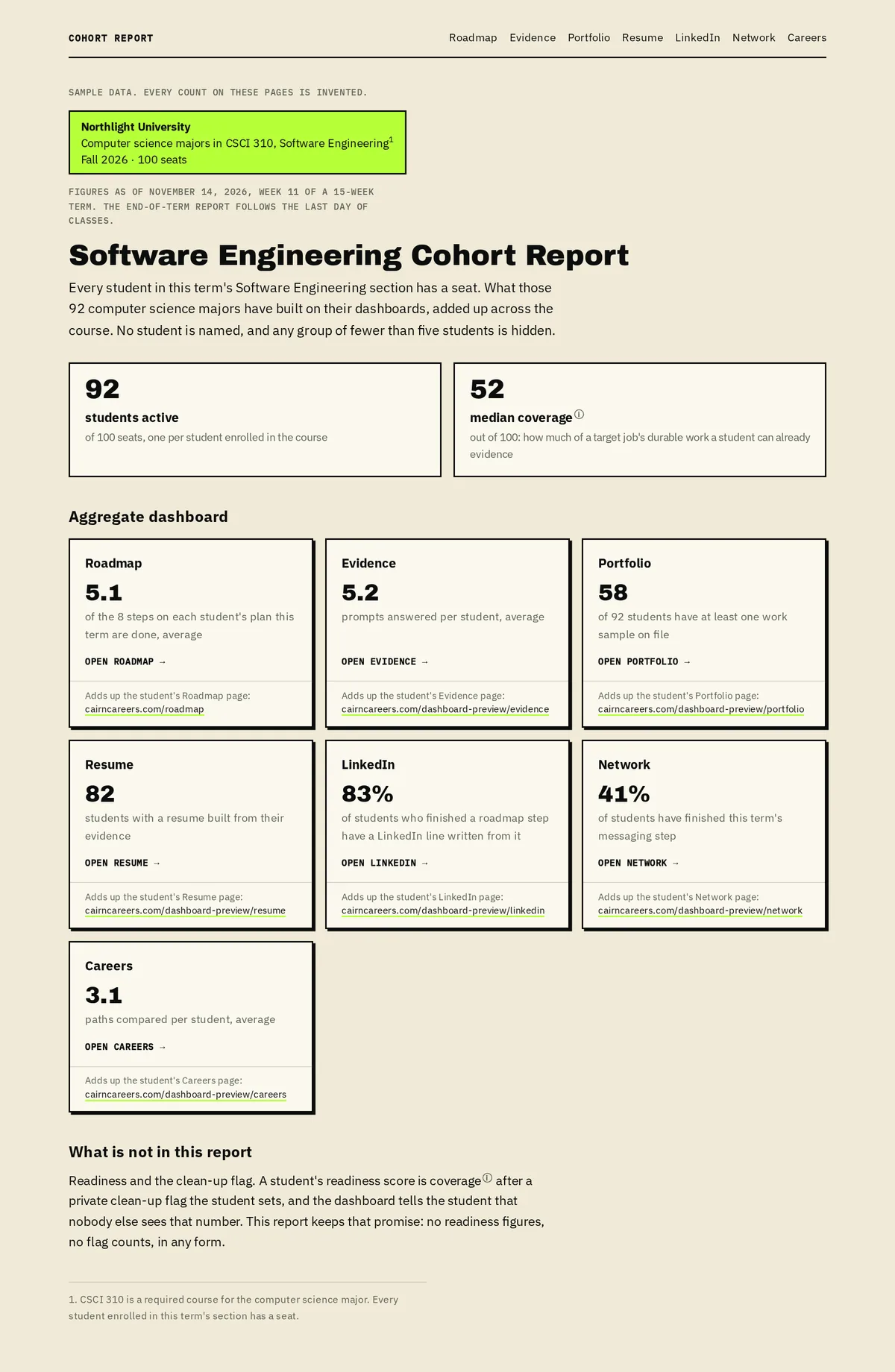
Your office receives one cohort report: what your students have built on their dashboards, added up. Roadmap steps done, evidence prompts answered, work samples on file, resumes and LinkedIn lines written, messages sent, and the paths compared. The report will show totals and averages only, with no names, emails, or free text, and groups of fewer than five students will be hidden.
What each student gets
- An AI-exposure score for every path they are weighing, built from 1,016 occupations matched from 54,000+ job titles1
- Which tasks in each job hold up to AI, and which do not
- Median pay and projected growth for each path, shown beside the score and never inside it
- A readiness read across seven factors, and the single factor most limiting their first move
What your office gets
- Seats you assign
- A cohort report: what your students have built on their dashboards, added up, from roadmap steps done to the paths they compared
- A methodology you can hand to a dean, an accreditor, or a parent
Why the number holds up
Built by a PhD psychometrician on O*NET task data from the U.S. Department of Labor and the peer-reviewed exposure framework in Science. Pay and growth are shown beside the score and never enter it. No language model touches the score. Patent pending.
Read the methodologyOn the roadmap for pilot partners
Coursework and campus experience turned into resume bullets and LinkedIn lines, and a term-by-term plan to a first job. Pilot partners shape what ships first.
A good fit for
University and college career centers, community colleges, bootcamps, and workforce programs serving students and recent graduates. Not built for mid-career transitions.
Research guides
- How weak ties help you get a first job
What the research says about acquaintances, strong ties and family connections when a student has no network yet.
- Why no major is AI-proof, and how to evaluate one
How to check the jobs a major leads to task by task, with pay and growth read as context.
- Turning a class project into a resume bullet
A four-step pattern with before and after examples from different majors.